Nothing about appliances is difficult. That is worth saying at the outset, because the subject has a reputation it does not deserve.
What appliances are is unforgiving about timing. A freezer cannot be defrosted quickly. An engineer cannot be summoned on a Tuesday morning. A set of bolts cannot be delivered by wishing. Every job here has a lead time, and the whole thing goes smoothly or badly depending on whether you started three weeks out or three days out.
Here is the order that works.
Four Weeks Out: Book the People
Gas work in a home has to be carried out by somebody on the Gas Safe Register, and it is against the law for anyone else to do it. That covers your cooker, and it means two separate visits: one to disconnect and cap the supply where you are leaving, one to connect and test where you are going.
You can find and check an engineer on the Gas Safe Register website, which searches by postcode. Every registered engineer carries an identification card, and the back of it lists what they are actually qualified to work on, which is worth a glance because gas qualifications are specific rather than general. The Health and Safety Executive, usually shortened to HSE, publishes plain guidance for households if you want the background.
Book the disconnection for the day before your date of entry rather than the morning itself. Moving day has enough moving parts already.
If your cooker or oven is hard-wired rather than plugged in, the same thinking applies with an electrician.
Three Weeks Out: Find the Transit Bolts
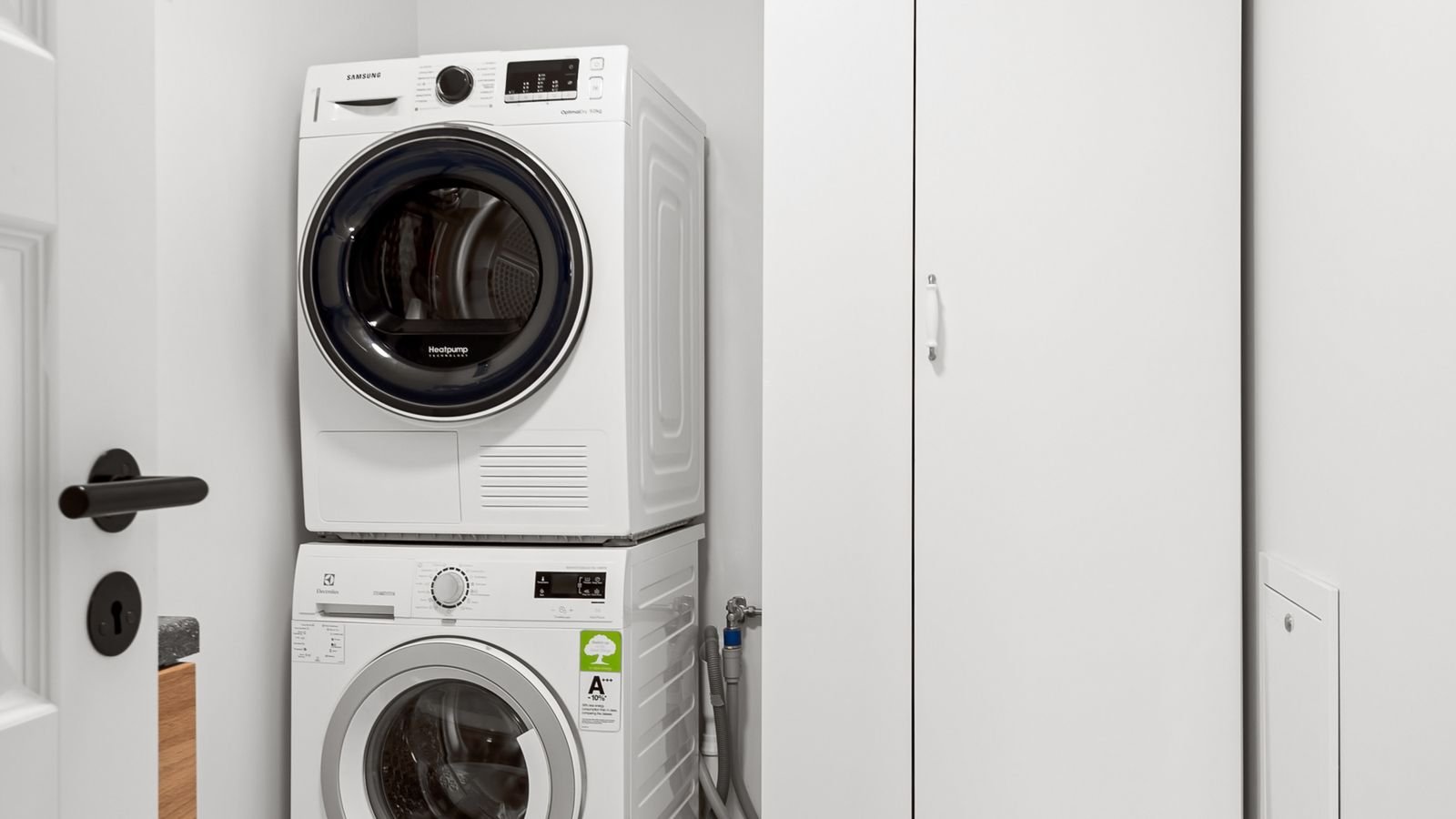
The drum in a washing machine hangs on springs and shock absorbers so it can move during a spin without walking the machine across the floor. That same movement is precisely what you do not want on a lorry, which is what the bolts prevent.
Without them the drum swings and the suspension takes the punishment, and the resulting repair costs considerably more than a set of bolts.
Check the usual places: the kitchen drawer that holds batteries and old menus, the back of the machine where the original bag is occasionally still taped, and the toolbox. If they have genuinely gone, manufacturers and appliance spares suppliers sell replacements, and you will need the model number from the sticker inside the door rim or on the back.
Three weeks gives delivery time to be uninteresting rather than urgent.

Two Weeks Out: Start Running Down the Freezer
Start with what is at the bottom, which is usually the most interesting archaeology in the house. Everybody finds something from a previous era of their life down there.
Plan meals around the contents rather than shopping over the top of them. Two weeks of slightly eccentric dinners is a small price for not standing over a bin bag of defrosted food at ten o’clock the night before you move.
Then defrost properly, giving it much longer than seems necessary, with towels down. Anything still frozen on the day either goes to a neighbour or goes in the bin, and neither is a good use of the morning.
The fridge side is easier: eat it down, empty it, wipe it out, and prop the door open once it is off so it does not develop a smell during the journey.
The Week Before: Everything Else
Drain the washing machine. Run a short spin a day or two ahead, turn off the water at the valve behind the machine, then disconnect the hoses with towels ready. Empty the filter at the bottom too, which nobody ever opens and which is holding water, several coins and a sock.
Fit the transit bolts. Follow the instructions for your model, since the number varies. If the manual has vanished along with everything else, most manufacturers let you download one using the model number.
Do the same for the dishwasher. Drained, hoses off, door taped shut.
Tape doors and coil hoses. Appliance doors swinging open on a tenement stair is exactly the sort of thing that damages the appliance, the wall and occasionally the person carrying it.
Photograph the connections before you take anything apart. Reconnecting at the other end is much easier when you can look at how it was rather than reasoning about it.
Deciding What Is Actually Coming
If you are selling, the fixtures and fittings list your solicitor prepared says what is included. People genuinely forget what they agreed to months earlier, and reading it takes two minutes.
If you rent, the appliances are probably the landlord’s and are staying put. Worth confirming with the letting agent rather than assuming in either direction.
And if something is yours and it is coming, be honest about whether it should. An appliance approaching the end of its life may not enjoy a long journey, and the cost of moving it, disconnecting it and reconnecting it can approach the cost of simply not taking it. That decision belongs at the start of this process rather than halfway through it.
The same applies in reverse at the new property. If a fridge is being left for you, find out its age and whether it works before planning your kitchen around it.
Integrated Appliances Are a Different Job
Integrated dishwashers, fridges and ovens are usually fixed to the surrounding cabinetry, and the decorative panel on the front frequently belongs to the kitchen rather than to the appliance. Taking the appliance and leaving a hole in a fitted kitchen is not a good outcome for anybody, and in a sale it can turn into a genuine dispute.
The general expectation is that integrated appliances stay with the kitchen unless something specifically says otherwise. Check the paperwork rather than the assumption.
Where an integrated appliance is definitely coming with you, flag it early. It needs removing carefully, it needs somewhere to go at the far end, and a machine built for a fitted space rarely looks right standing on its own in the middle of a new kitchen.
Moving Day, and After
Give a fridge or freezer several hours upright before switching it on so the cooling system settles, and overnight is the comfortable version. Turning one on immediately is the appliance mistake with the highest cost attached, and it is entirely avoidable by simply not doing it.
Do not plan on a load of washing the first evening either. Between the reconnection, the water and the general state of the house, that is a job for the following day.
Which leaves the takeaway, obviously. It is not really a house move without one.
The Smaller Appliances Nobody Plans For
Microwaves have a glass turntable that will not survive being rattled about. Take it out, wrap it separately, and tape the door shut.
Kettles and coffee machines hold water even when they look empty. Tip them out properly, because a slow leak inside a sealed box of kitchen things is discovered days later and always in the same disappointing way.
Anything with a glass lid or a removable jug, from blenders to food processors, comes apart and gets wrapped in its own right.
The one genuinely useful habit here is keeping the kettle out of the van entirely. It goes in the car with the mugs, the teabags and the milk, and it is the first thing unpacked at the other end. Everything else can wait an hour. That cannot.
Why the Scottish Timetable Suits This
Buyers south of the border frequently cannot commit to anything until contracts exchange, which can be a fortnight before completion. Try booking an engineer for both ends on that basis.
The advantage here is genuine and it is routinely wasted, because households spend the certainty on the removals booking and then wait. The appliance list is the natural thing to work through next, and it can start the day your solicitor confirms the date.
Our guide to how far ahead to book a removal company in Scotland sets out the wider timeline, and if you want the appliance detail in full, we have separate guides to moving a fridge freezer and moving a washing machine.
A Note on Tenement Stairs
Appliances are heavy, bottom-weighted and a poor shape for a turn, which makes them the item most likely to cause difficulty on a traditional stair.
The half landing is usually the constraint rather than the doorway, and a full-size American-style fridge freezer is the appliance most likely to meet its match there. If you have one, mention it early, because it changes the crew and occasionally the plan.
It is also worth measuring at the new address rather than assuming. A machine that lived happily in one kitchen does not automatically fit the space waiting for it, and finding that out with the appliance on the landing is nobody’s preferred outcome. There is more on this in our guide to what a removals surveyor is actually looking at.
How Edinburgh Moving Fits Around It
Tell us what appliances are coming when you get your quote. It sounds like a small detail and it changes the plan, because appliances affect the crew, the equipment and the order the van gets loaded in.
What we cannot do is the gas work, which belongs to a registered engineer, and preparation such as defrosting and fitting transit bolts is a householder job. Everything else is worth a conversation. Ring and talk it through rather than guessing, since what is workable depends on the appliances and the property.
Our packing services cover the rest of the kitchen, which produces more boxes than any other room in the house. House removals cover the move itself, storage helps where dates leave a gap, and more practical guides sit in our Edinburgh moving guides.
Common Questions About Appliances and Moving Day
How far ahead should I start on appliances?
About four weeks. Book any gas engineer first, since their diary is the constraint. Hunt for transit bolts at three weeks so there is time to order replacements, and start running down the freezer at two. The final week covers draining and taping.
Can I disconnect the gas cooker myself?
No. Gas work in a home must be carried out by a Gas Safe registered engineer, and it is illegal for anyone else to do it. You will need two bookings, one at each address, and the disconnection is best arranged for the day before your date of entry.
What are transit bolts and do I need them?
They hold the washing machine drum still while it travels, preventing it swinging and damaging its own suspension. They came fitted when the machine was delivered and were removed before first use. If yours have disappeared, manufacturers and spares suppliers sell replacements by model number.
How long does defrosting a freezer take?
Longer than an evening, particularly with older models carrying real ice build-up. Give it a full day and start running the contents down a fortnight ahead, which spares you standing over a bin bag of defrosted food the night before the move.
How long should a fridge freezer stand before I switch it on?
Several hours upright, and overnight is the comfortable option, so the cooling system can settle after the journey. Switching it on straight away is the appliance mistake with the highest cost attached and the easiest one to avoid.
Will the removals crew disconnect my appliances?
Gas work needs a registered engineer, and preparation such as draining and defrosting is normally the householder’s job. For anything else, ring and ask when you book, because what is possible depends on the appliances and the property.
Do appliances have to travel upright?
Yes, and strapped. Laying a washing machine down strains the drum mountings even with bolts fitted, and tipping a fridge risks the cooling system. Upright and secured is the rule for all of them.
This describes typical Scottish practice as at 19 August 2026. Gas safety requirements apply across the United Kingdom and are set out by the Health and Safety Executive and the Gas Safe Register, which are the right sources for anything specific to your appliances.