Almost everything written about moving with animals concentrates on the day itself. The day matters, but it is short, and by then your options have narrowed to whatever you already arranged.
The jobs that genuinely reduce the difficulty all sit in the weeks beforehand, and most of them have a queue attached. Catteries fill for popular dates. Vets take time to transfer records. Repeat prescriptions cannot be issued at an hour’s notice. None of that is difficult, and all of it is unpleasant to discover late.
Why the Scottish Timetable Helps Here
Buyers in England often cannot commit to anything until contracts exchange, which can be a fortnight before completion. Anyone who has tried to book a boarding place on that notice knows how that conversation goes, particularly at a month end.
The practical consequence is that a Scottish household can work through the list below calmly. The equivalent household south of the border is frequently doing all of it at once, in the final ten days, alongside everything else.
The one job that needs no date at all is getting the carrier out, and that is also the one people leave until last. More on that below.
Six Weeks Out: The Bookings With Queues
Book boarding if you are using it. A cattery or kennel for the day of the move, or for a couple of days either side, removes the single largest risk: an animal escaping through a front door that stands open for hours. Dates around the end of a month go first, for the obvious reason that most entry dates land there.
Check what the boarding place requires. Most want vaccinations up to date, and some require them completed a set period before arrival rather than the week before. That is the detail that catches people, because it turns a simple booking into a vet appointment with its own lead time.
If a friend or relative is taking the animal instead, confirm it properly rather than assuming. A vague agreement in June becomes an awkward phone call in August.
Arrange cover for the day itself if the animal is staying with you. Somebody needs to be responsible for the pet and not also carrying boxes, and deciding who in advance is considerably better than sorting it out at eight in the morning.
Four Weeks Out: Vets, Records and the Carrier
Find a vet before you need one. Registering in advance means the first visit is routine rather than an emergency in an unfamiliar area. Ask for records to be transferred at the point of registering, since that is not automatic and can take a little while.
Check the practice covers your animal. Not every vet sees rabbits, birds or reptiles, and exotics practices are thinner on the ground. Worth confirming rather than assuming, particularly outside the city.
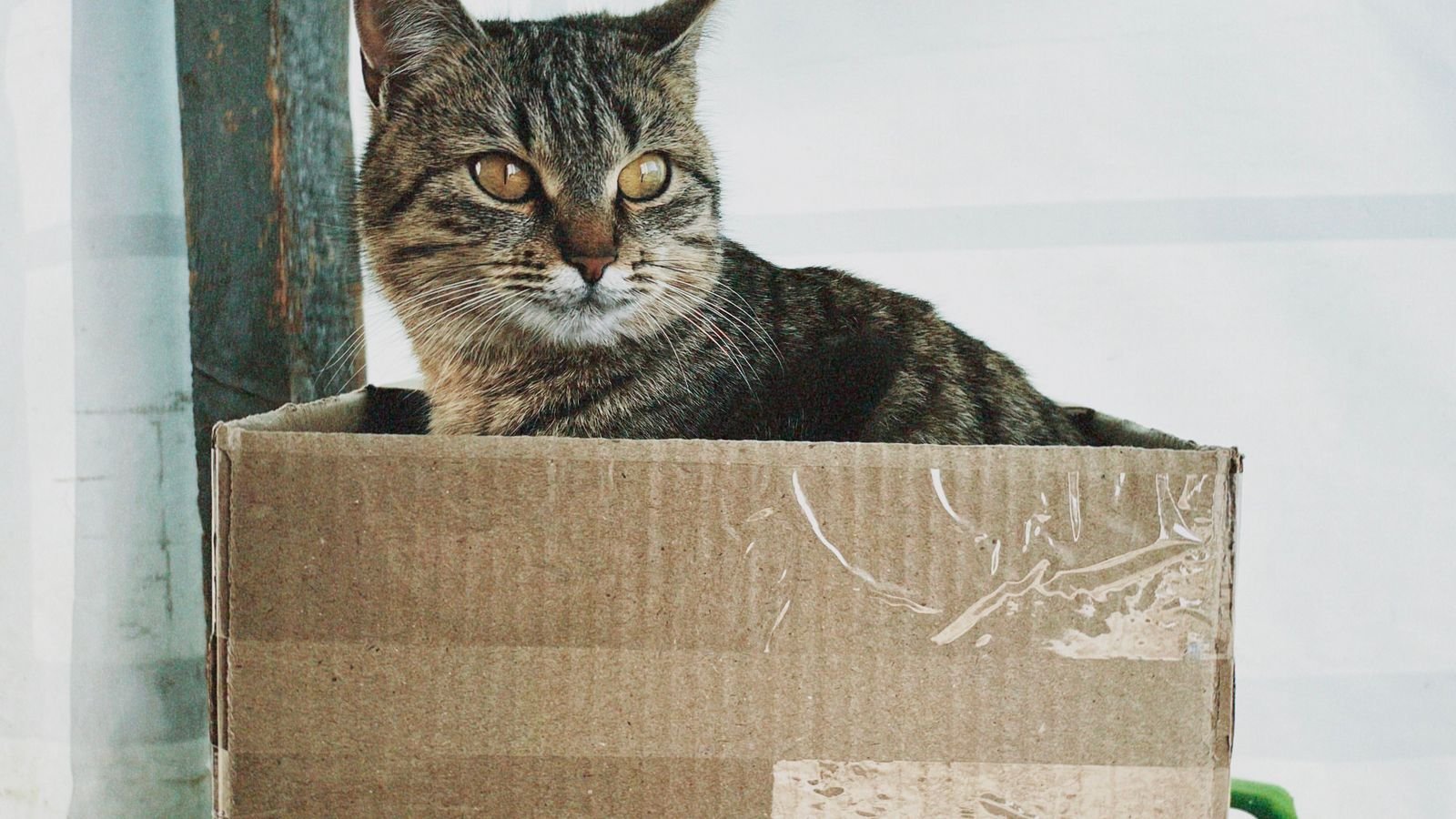
Leave the carrier out, open, with a blanket in it. For a cat especially, a carrier that only appears before a car journey becomes a warning sign, which is why the animal is under the bed before you have picked it up. Weeks of it sitting harmlessly in the hall changes that association. Feed treats near it, then in it.
Check the carrier is actually sound. Doors that no longer latch properly, and cardboard carriers softened by a previous journey, both fail at the worst moment.

Two Weeks Out: Medication, Microchips and Insurance
Order repeat prescriptions now. Vets do not issue repeats on demand, and a gap in medication during the fortnight when an animal is already unsettled is worth avoiding. Ask for enough to cover the move and the first weeks afterwards.
Update the microchip database. For dogs this is a legal duty anywhere in the UK: microchipping is compulsory and the keeper must keep the registered details current, which includes a change of address. Out-of-date details mean the dog is not properly chipped in law, and enforcement can follow.
The position for cats differs in Scotland. Compulsory cat microchipping applies in England, not here, so a Scottish cat owner is not under the same legal obligation. That said, a chipped cat with a current address is the main reason lost cats get home, and the first weeks after a move are exactly when cats go missing. If the cat is chipped, update it. If not, it is worth doing anyway.
Tell your pet insurer. Premiums are often postcode-linked, and an address that no longer matches can complicate a claim at precisely the wrong moment.
Replace the dog’s tag. Dogs in a public place must wear a collar showing the owner’s name and address, which is a separate requirement from the microchip. A tag with your old address on it is no use to whoever finds them.
The rest of the notification list is covered in our change of address checklist for a Scottish move.
If You Are Renting
The Housing (Scotland) Act 2025 will change this, introducing a right for tenants to request permission that cannot be unreasonably refused. Those provisions are not yet in force and require secondary legislation, so the current position still applies for now. England and Wales moved to a similar arrangement earlier in 2026, which is why advice written for a UK-wide audience may not describe the Scottish position accurately.
The practical advice is unchanged either way: get consent in writing, keep a copy, and do it before you are committed to the property rather than after the van is booked.
Flats can carry restrictions in the title deeds as well as the lease, and those apply to owners too. If you are buying a flat and have an animal, it is a reasonable question to put to your solicitor while they are examining the titles.
The Week Of, and the Day Itself
Feed at the usual times. Walk at the usual times. Consistency is doing real work at this point, and it costs nothing.
Pack the pet things last and unpack them first: food, bowls, medication, litter, bedding and a favourite toy in a bag that travels in the car rather than the van.
Do not wash the bedding, however tempting. Familiar scent is what an animal uses to orient itself somewhere unfamiliar, and a laundered blanket removes the one thing that smells right.
On the day, the animal goes in one cleared room with a sign on the door before anything starts, or to the boarding place booked six weeks ago. Every pet travels in the car with a person, never in the removals van, which is covered further in our guide to moving day hour by hour.
At the far end, set their space up before unpacking anything else, and keep cats indoors for at least a fortnight.
A Note on Tenement Flats
Two things worth thinking about in advance if you are moving into a traditional flat.
The close is a shared escape route. A cat that gets out of a flat door has a stairwell running several floors and a street door that other people open regularly. Keeping the animal shut in one room on the day matters more here than in a house with a garden.
Access to outside space is often communal rather than private. A back green shared between several flats is not the same as an enclosed garden, and letting a cat out into one is closer to letting it out onto the street. Worth knowing before you plan the first outdoor trip rather than after.
Longer Journeys, and Moving Up From England
A move from London or the Midlands to Edinburgh is a long day for an animal that may never have been in a car for more than twenty minutes.
Feed lightly beforehand rather than not at all. A small meal several hours before setting off suits most animals better than travelling completely empty or completely full. Water should be offered at stops rather than left sloshing in a moving carrier.
Plan where you are stopping. Dogs need a break and a chance to relieve themselves every couple of hours, on a lead, well away from the carriageway. Cats and small animals are better left undisturbed in a shaded, ventilated car with someone present.
Never open a carrier outside the car. This is the single most common way pets are lost on long moves. A frightened animal at a motorway service area has nowhere safe to go and no map of anywhere. If the carrier needs opening, it happens inside a closed vehicle.
Temperature is the real risk. Cars heat up quickly even on a mild Scottish day, and small animals overheat far faster than people expect. Park in shade, keep air moving, and never leave an animal in a stationary car alone.
Break the journey overnight if it is very long. Pet-friendly accommodation needs booking well in advance, particularly around month ends, and arriving at a new house late at night with an exhausted animal is worse than arriving fresh the following morning.
Anyone relocating from further south will find the wider legal and practical differences set out in our guide to what changes when moving to Scotland, and the pet points above sit alongside those.
What to Expect in the First Fortnight
Dogs often become clingy and may follow you between rooms for a week or so. That usually resolves as the routine re-establishes itself, and keeping walks at their usual times helps more than extra attention does.
Cats commonly hide for the first few days. Provided they are eating, drinking and using the tray, that is them assessing the situation rather than a problem to solve. Pulling a cat out from under a bed to reassure it achieves the opposite.
Rabbits and guinea pigs need closer watching, because prey animals conceal distress and their appetite is the clearest signal available. A rabbit that stops eating needs a vet promptly rather than overnight observation.
Across every species, appetite returning to normal is the most reliable sign that things are settling. Most animals are visibly themselves again within a fortnight, and cats often take somewhat longer than that.
How Edinburgh Moving Works Around Pets
Removals crews cannot carry animals, and no firm should suggest otherwise. What helps is knowing in advance what is in the property and where.
Tell us at quote stage. A room that stays shut until last, a tank that needs the power left on, a hutch in the garden the crew should keep clear of. That way the load is planned around it rather than a closed door appearing halfway through the morning.
Aquariums, vivariums and large cages are worth mentioning specifically, since they must travel empty, are fragile, and need positioning first at the new address rather than last.
Our packing services also shorten the disruption, which is the part animals actually notice: a house packed in two days gives a cat far less warning than one packed over a month. House removals cover the move, storage covers a gap between dates, and more guides are collected in our Edinburgh moving guides.
Common Questions About Preparing a Pet for a Move
How far ahead should I book a cattery or kennel?
Six weeks is comfortable, and earlier still for a date at the end of a month, when most entry dates cluster. Check the vaccination requirements at the same time, because some places require them completed a set period before arrival, which adds a vet appointment with its own lead time.
Do I have to update my pet’s microchip details when moving in Scotland?
For dogs, yes. Microchipping is compulsory across the UK and the keeper must keep registered details current, including the address. For cats the compulsory scheme applies in England rather than Scotland, so there is no equivalent legal duty here, though updating a chipped cat’s record is still strongly worth doing.
When should I get the carrier out?
About a month before, and then leave it out permanently. A carrier that only appears immediately before a car journey becomes a warning signal, which is why the cat disappears the moment it comes out of the cupboard. Weeks of it sitting harmlessly in the hall, with treats in it, changes what it means.
Can I keep a pet in a rented flat in Scotland?
Only with the landlord’s written consent under current practice, since the model private residential tenancy requires it. The Housing (Scotland) Act 2025 will introduce a right to request that cannot be unreasonably refused, but those provisions are not yet in force. Get permission in writing before committing to the property.
Should I wash my pet’s bedding before the move?
No. Familiar scent is the main thing an animal has to orient itself with in an unfamiliar building, and washing it removes exactly that. Move it as it is, arrange it the same way at the other end, and wash it once they have settled in.
What should I sort out in the last fortnight?
Repeat medication ordered with enough to cover the move and the weeks after, microchip details updated, the insurer told, and a new tag for the dog’s collar. Then keep feeding and walking times fixed, and decide who is responsible for the animal on the day.
This describes typical Scottish practice as at 11 August 2026. Microchipping requirements, tenancy rules and boarding conditions change and vary by provider; your vet, solicitor or landlord is the right source for your own circumstances.